





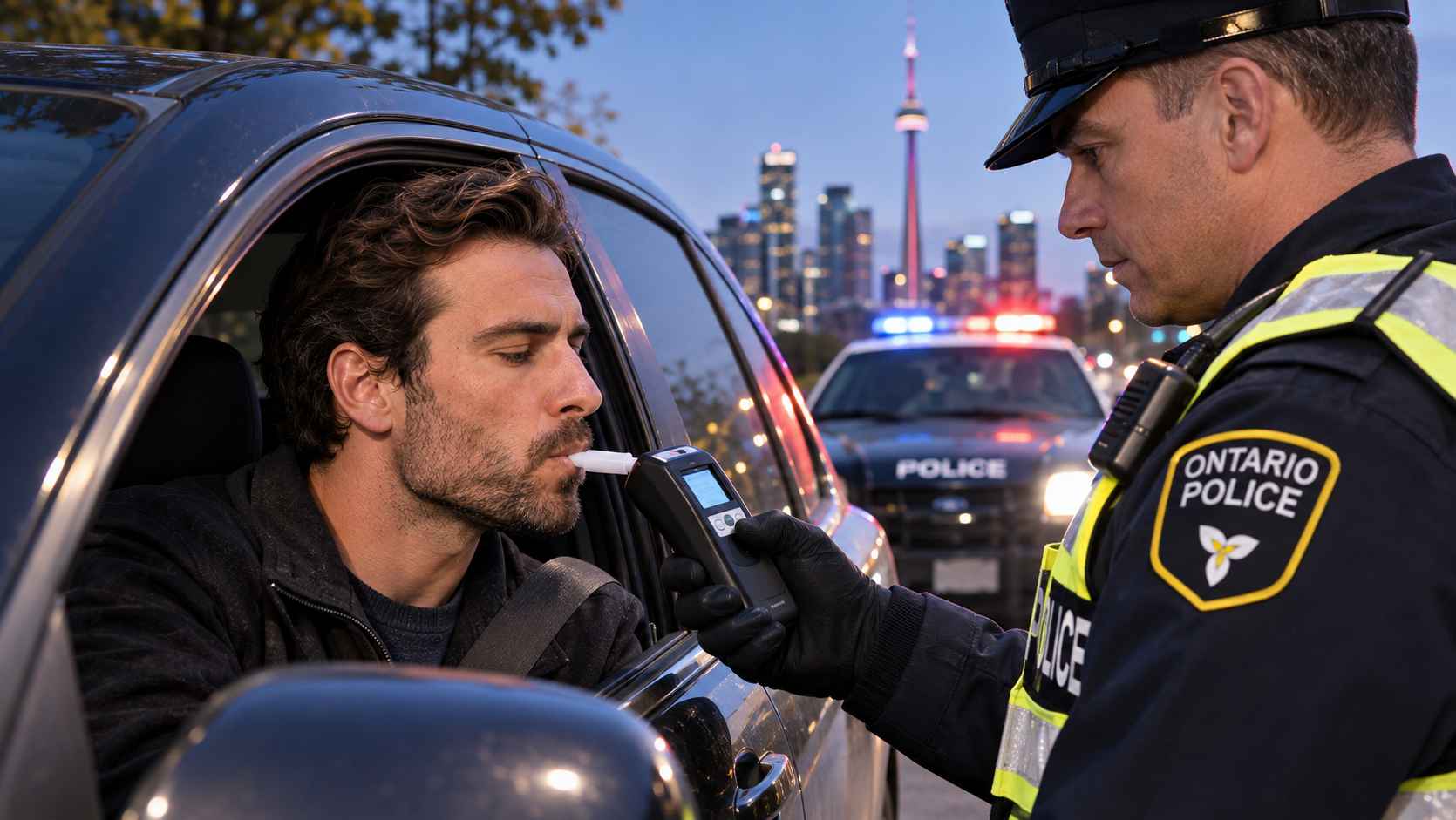
Impaired driving is a serious road safety concern in Ontario, and Canadian law establishes rules intended to protect drivers, passengers, and the wider public. Although alcohol is often associated with impaired driving, the law also applies to drugs and combinations of substances that affect a person’s ability to operate a vehicle safely.
Facing an impaired driving allegation can raise questions about driving privileges, employment, insurance, and criminal proceedings. However, the consequences depend on the circumstances, the available evidence, and whether a criminal offence is ultimately proven.
Understanding how impaired driving laws operate can help Ontario residents recognize their responsibilities and the legal procedures that may follow a police investigation.
Understanding Impaired Driving Laws in Ontario
Impaired driving offences in Canada are governed primarily by federal criminal law, while Ontario also has provincial rules concerning driver licensing and road safety.
The Criminal Code of Canada prohibits operating a conveyance when a person’s ability to do so is impaired to any degree by alcohol, drugs, or a combination of both.
The legislation also establishes offences involving prohibited concentrations of alcohol or certain drugs in the blood within specified periods after operating a conveyance, subject to applicable legal exceptions.
Criminal defence professionals, including Stephen Jack Criminal Lawyer, assist individuals in understanding criminal allegations and the legal procedures that may follow impaired driving charges in Toronto and surrounding Ontario jurisdictions.
Importantly, an investigation or criminal charge does not automatically establish guilt. The prosecution must prove the alleged offence according to the applicable legal standard.
How Alcohol and Drug Impairment Can Affect Driving
Alcohol and drugs can affect abilities necessary for safe vehicle operation, including judgment, concentration, coordination, and reaction time.
Alcohol may influence a person’s ability to recognize hazards, maintain attention, or respond appropriately to changing road conditions.
Drug impairment can involve cannabis, certain prescription medications, illegal substances, or combinations of drugs and alcohol.
Some medications prescribed for legitimate medical purposes may cause drowsiness or affect concentration.
The fact that a substance is legally available does not automatically mean driving after using it is safe or lawful.
Drivers should understand the potential effects of substances they consume and avoid operating vehicles when their driving ability may be impaired.
Why Impairment Is Not Always Obvious
Impaired driving is not limited to situations where someone displays visible signs of intoxication.
A person may appear capable of holding a conversation or performing ordinary activities while still experiencing changes in judgment or reaction time.
Canadian criminal law recognizes that impairment can exist to varying degrees.
Additionally, offences involving prohibited blood alcohol or drug concentrations do not necessarily require proof that a driver appeared visibly intoxicated.
This distinction matters because an investigation may involve observations, testing procedures, and other evidence rather than relying solely on outward behaviour.
The relevant legal questions depend on the particular offence alleged and the evidence available.
Roadside Procedures and Criminal Proceedings
Roadside investigations and criminal court proceedings serve different purposes.
Police officers may conduct lawful traffic stops and use authorized screening procedures to investigate suspected impaired driving.
Depending on the circumstances, these procedures may include breath screening, physical coordination tests, approved drug screening equipment, or further testing.
Certain lawful testing demands must be complied with, and refusing or failing to comply without a reasonable excuse can itself constitute a criminal offence.
Ontario also has administrative penalties that operate separately from criminal prosecutions.
Depending on the circumstances, a driver may face an immediate licence suspension or vehicle impoundment before any criminal trial concludes.
Criminal proceedings, by contrast, determine whether the prosecution can establish an offence under the applicable legal standard.
An administrative suspension is not the same as a criminal conviction.
Potential Consequences of an Impaired Driving Conviction
An impaired driving conviction can involve significant legal and practical consequences.
Depending on the offence and individual circumstances, criminal penalties may include fines, imprisonment, or other sanctions authorized by law.
Ontario may also impose licensing consequences, including driving prohibitions, licence suspensions, education or treatment requirements, and ignition interlock conditions.
The specific consequences depend on factors such as the offence, previous relevant convictions, and applicable provincial rules.
A criminal conviction may also create difficulties involving employment, professional licensing, travel, and other responsibilities.
However, these effects are not identical for everyone.
It is important to distinguish between potential consequences and outcomes that have actually occurred in a particular case.
How Driving and Criminal Records May Affect Everyday Life
Driving privileges are important for many Ontario residents.
Some individuals rely on personal vehicles to reach workplaces, attend appointments, transport family members, or perform business responsibilities.
A licence suspension may therefore require changes to transportation arrangements and daily routines.
Driving records may also affect insurance considerations, depending on the circumstances and an insurer’s applicable rules.
A criminal conviction creates separate considerations because criminal records may be relevant to certain employment opportunities, licensing processes, or background checks.
However, a criminal charge is not the same as a conviction, and individuals should not assume that every allegation produces the same record-related consequences.
Understanding these distinctions can help people make informed decisions while their legal matters remain unresolved.
Understanding Legal Rights During an Investigation
Individuals involved in impaired driving investigations have legal rights under Canadian law.
The Canadian Charter of Rights and Freedoms provides protections against unreasonable search or seizure and establishes rights for individuals who are arrested or detained.
These include the right to be informed of the reasons for detention and the right to retain and instruct legal counsel without delay.
However, impaired driving investigations involve specific legal rules concerning roadside screening.
In certain circumstances, police may require immediate roadside testing before a driver has an opportunity to consult a lawyer.
More extensive investigative procedures may involve different requirements.
Because rights and obligations depend on the circumstances, individuals should not assume that they can refuse a lawful testing demand simply because they wish to obtain legal advice first.
Understanding these distinctions is important to navigating an investigation responsibly.
Why Evidence and Individual Circumstances Matter
Evidence plays a central role in impaired driving prosecutions.
Depending on the case, relevant information may include police observations, testing records, witness statements, video recordings, and documentation relating to investigative procedures.
Courts may need to consider whether evidence was collected lawfully and whether applicable procedural requirements were followed.
The reliability and admissibility of particular evidence can also become important legal questions.
For example, the prosecution may rely on evidence relating to impairment or prohibited substance concentrations, depending on the offence charged.
Defence counsel may examine disclosure materials and assess whether the evidence supports the legal elements of the allegation.
Every case requires consideration of its own circumstances rather than assumptions about how another impaired driving matter was resolved.
The Role of Criminal Defence Counsel
Criminal defence lawyers help accused individuals understand the charges they face and the procedures involved in criminal court.
Their responsibilities may include reviewing disclosure, examining evidence, assessing legal issues, and explaining the implications of available options.
Individuals seeking Toronto criminal defence legal services may benefit from understanding how counsel approaches impaired driving allegations and relevant Ontario court procedures.
Legal representation can also help clarify the relationship between criminal proceedings and provincial driving restrictions.
However, retaining a lawyer does not guarantee that a charge will be withdrawn, dismissed, or resolved in a particular way.
The purpose of legal representation is to support informed decision-making and ensure that relevant rights and procedures receive appropriate consideration.
Approaching an Impaired Driving Charge Responsibly
Facing an impaired driving charge requires attention to legal obligations and practical responsibilities.
Individuals should review documents provided by police, confirm court dates, and understand whether any driving restrictions apply.
They should not operate a vehicle while their licence is suspended or while subject to an applicable driving prohibition.
Relevant documents and information should be preserved rather than altered or destroyed.
Avoiding speculation about the case, particularly through public online discussions, may also help prevent unnecessary complications.
Because every situation differs, general information cannot replace legal guidance based on the specific allegations and circumstances.
Conclusion: Understanding the Law and Its Consequences
Impaired driving laws in Ontario address risks associated with alcohol, drugs, and other substances that can affect safe vehicle operation.
The legal process may involve roadside investigations, administrative driving restrictions, criminal charges, and potential consequences following conviction.
Understanding the difference between an allegation, charge, and conviction is essential to avoiding premature conclusions.
By recognizing their legal responsibilities, respecting driving restrictions, and obtaining appropriate advice when necessary, individuals can navigate criminal proceedings more responsibly while supporting the broader goal of road safety.